RICHARD PURDY

ABOUT THE ARTIST
Richard Purdy received his B.F.A. from Indiana University of Pennsylvania. He resides in New York.
During the ‘80s Purdy exhibited his magical realist paintings in the East Village. His work garnered some attention. In 1985 he stopped painting for almost ten years. Purdy says of this period in his life: “what was required was a retooling of my thoughts on what visibilities I wanted to bring into being.” During this decade he immersed himself in other pursuits: motorcycle racing, speed bicycle racing and an in-depth reading program on particle physics, quantum mechanics and cosmology. In 1990 Purdy realized how he could radically alter his technical approach and created what he calls “prototypes” that “were interesting enough for him to resume painting.”
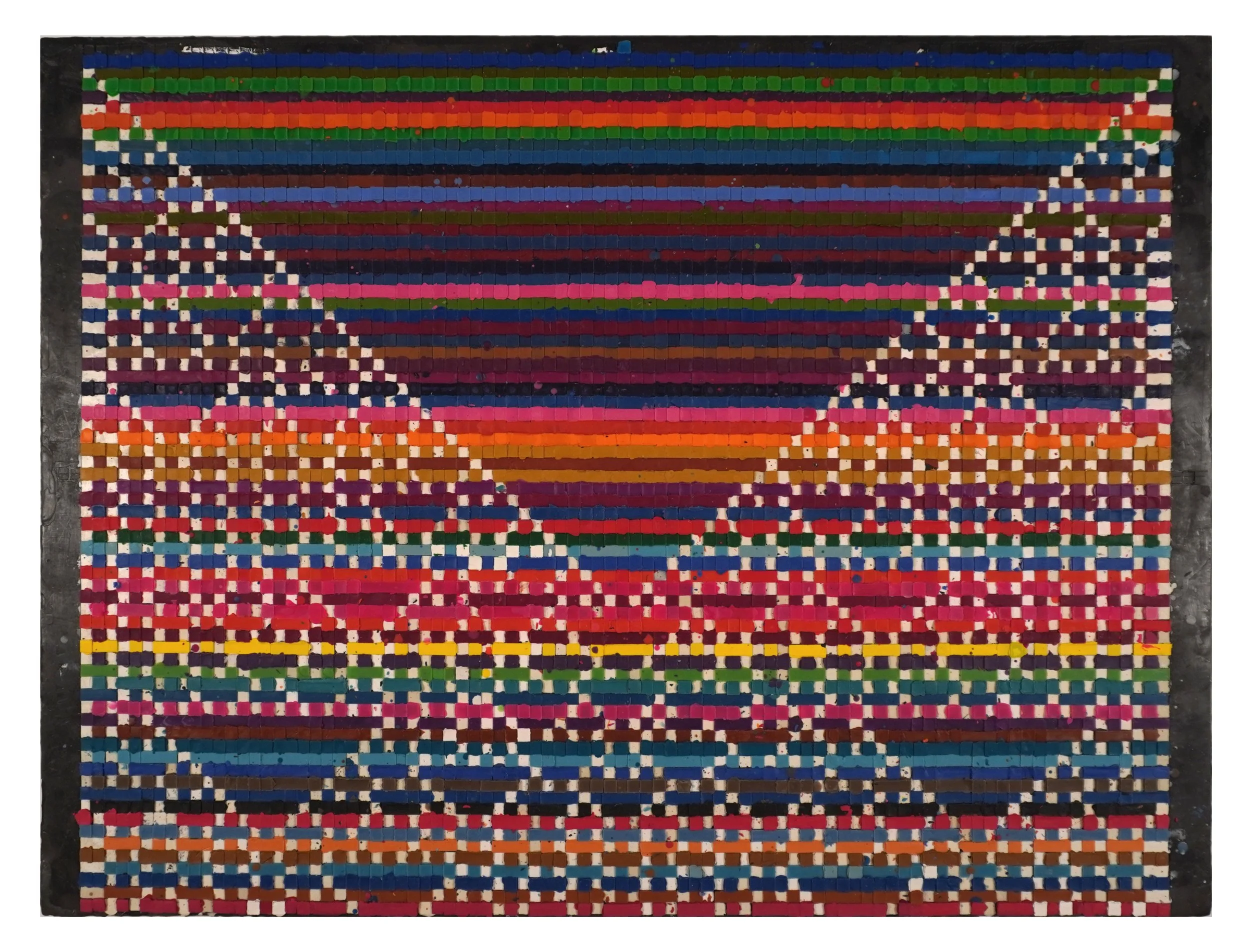
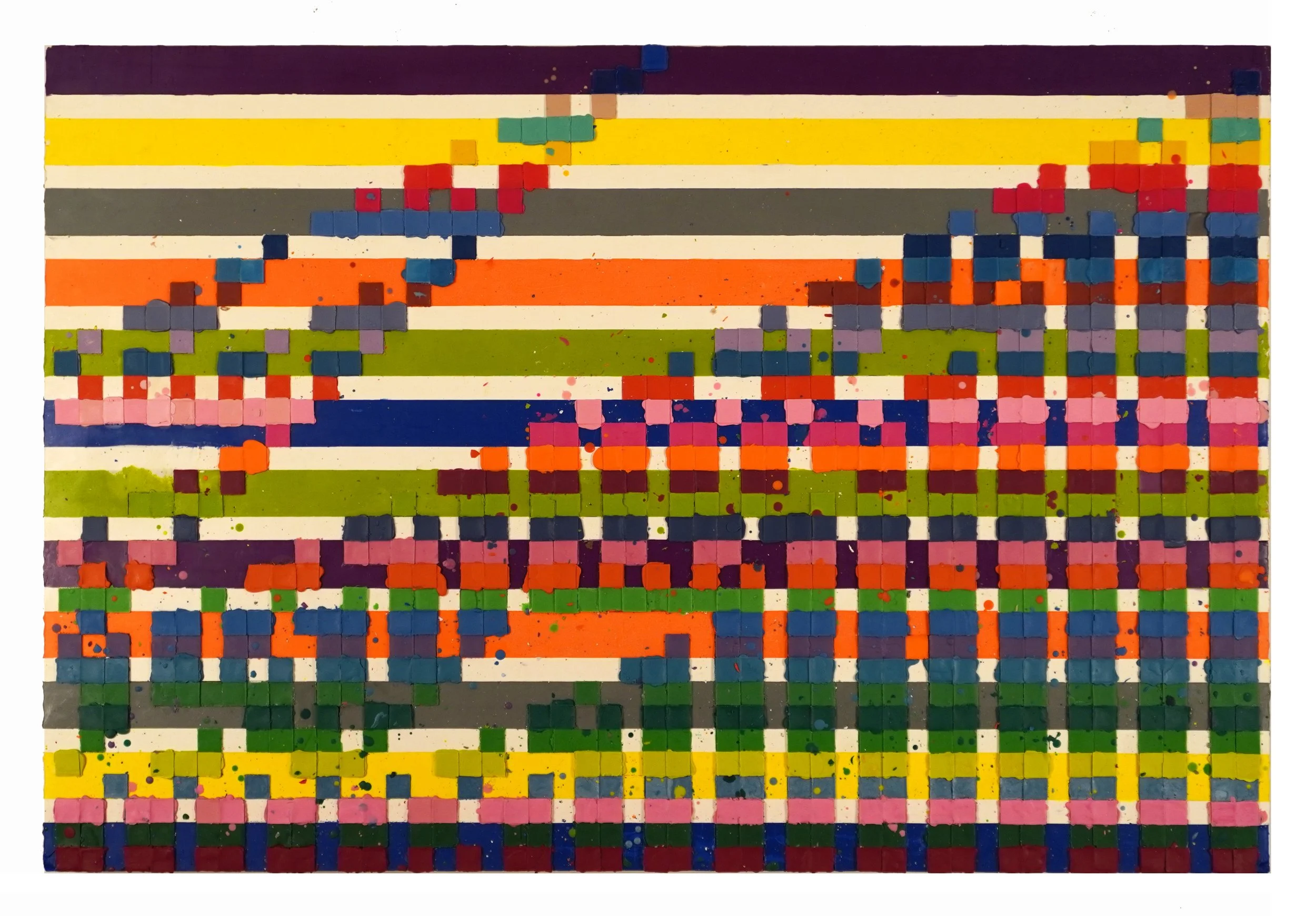
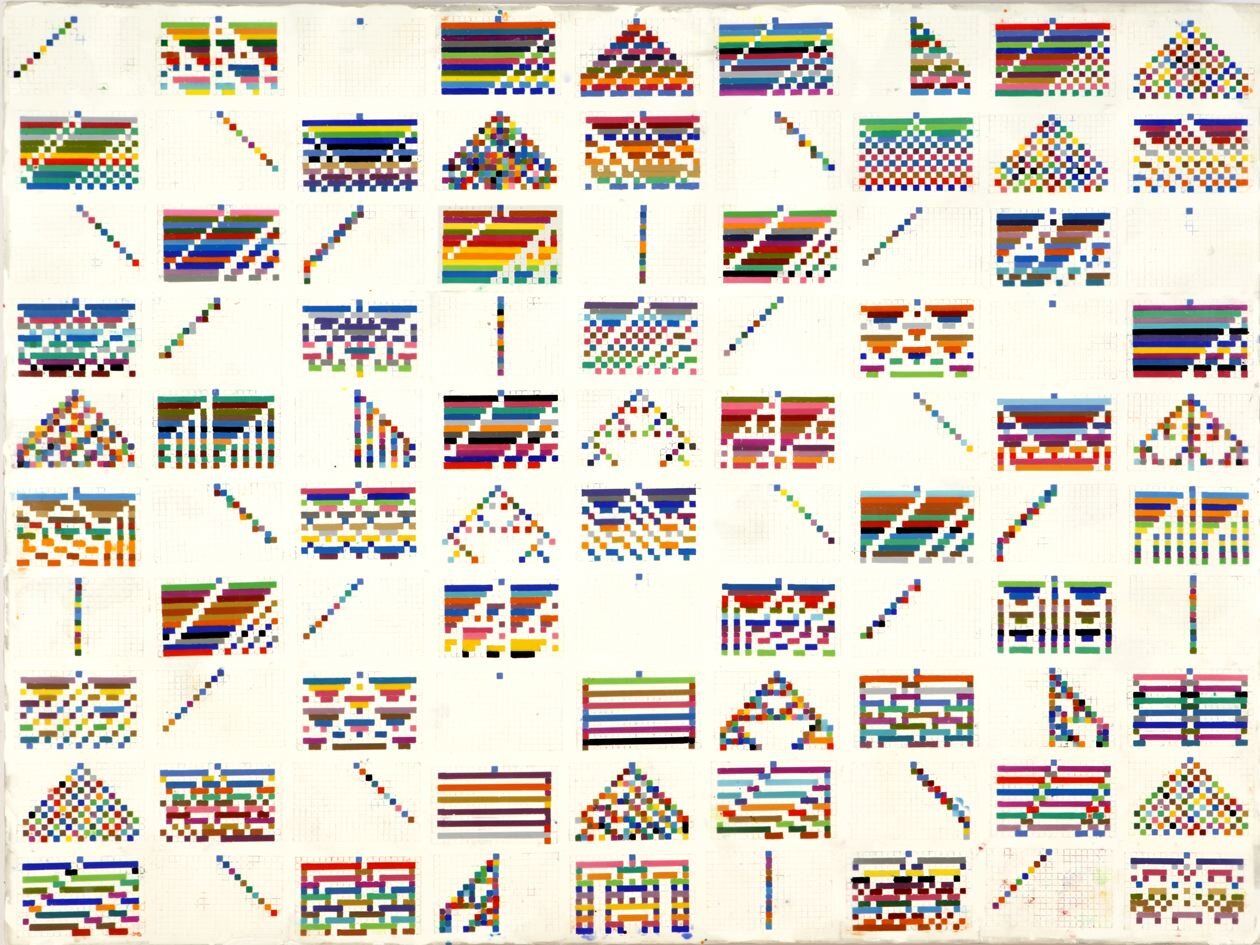
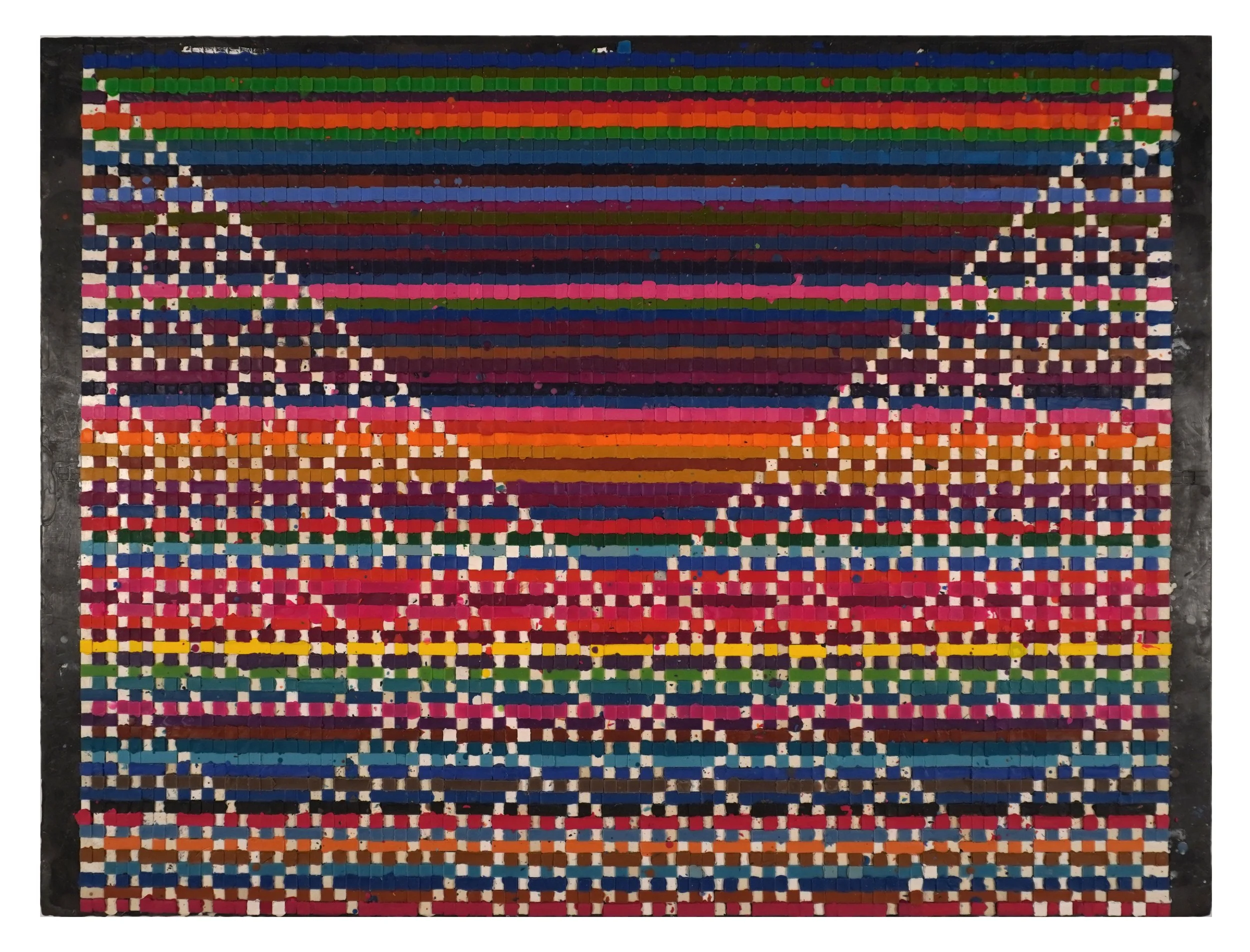
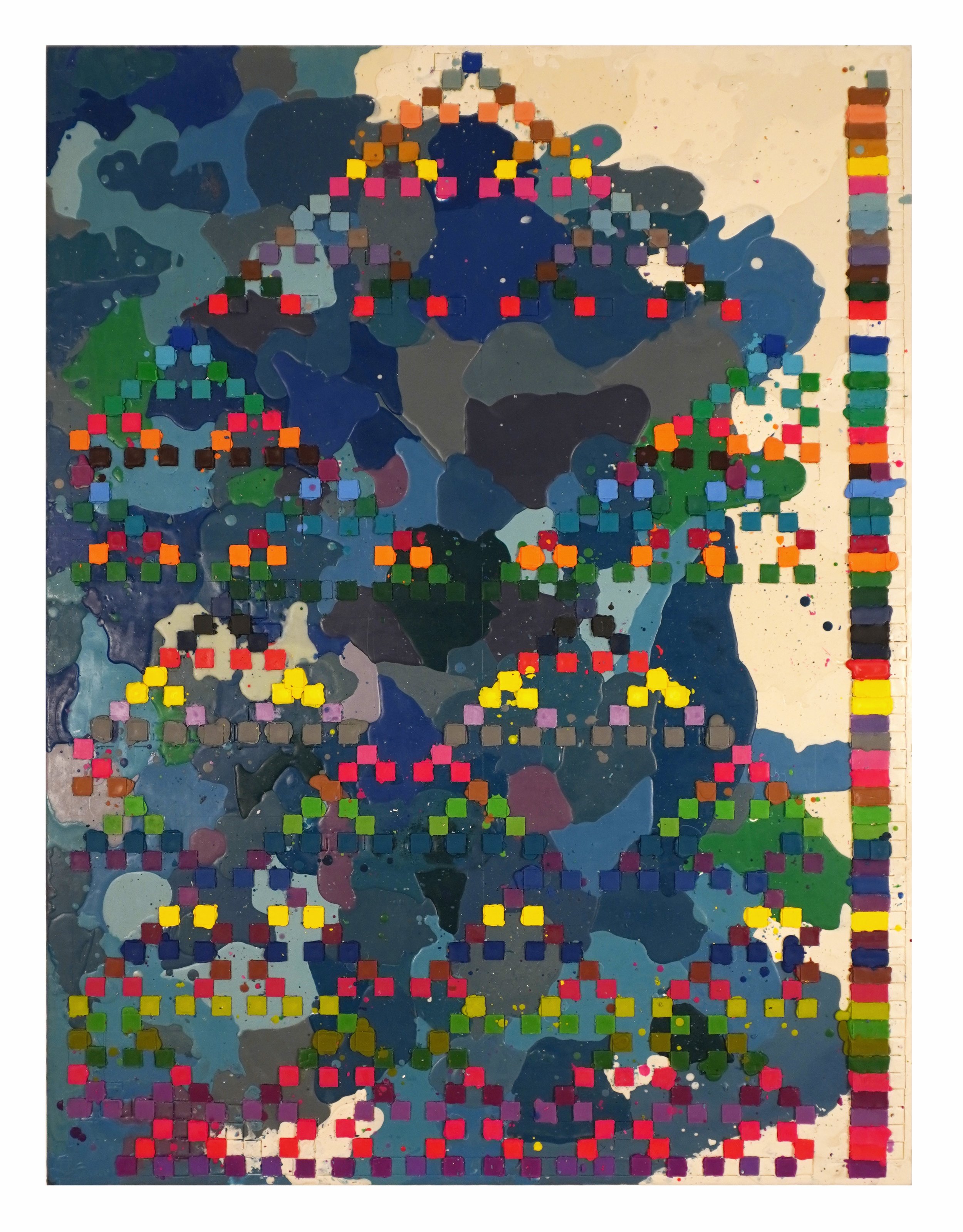
Since his last show, five years ago, Richard Purdy has been working on a body of wax encaustic paintings based on Stephen Wolfram’s book, A New Kind of Science. Purdy utilizes a simple mathematical formula to create his compositions based in Wolfram’s cellular automata. Rather than fill the squares in his grid with numbers (a la Wolfram) Purdy fills his with a dazzling array of color.
Linking this exhibition to the artist’s last is his use of “signature materials,” wax encaustic, pigment, wood panels. In most of the paintings, the artist selects white as his background color, the white functioning as both color and light. In some of the paintings the artist chooses black as the background, which makes the rainbow palette of tiny wax squares shimmer like tesserae of a stained glass window. While based in science, these paintings are visually arresting; they require no knowledge of the theory the artist uses to create the compositions.
All of Purdy’s works are titled simply with a number, which indicates how the artist programmed the “pattern” of the painting. In 146, a diptych, four vertical white columns traverse the composition, creating a rhythmic, musical motif. At the left is a small male figure, at the right a small female figure. Is the artist suggesting a possible walk through his colorful maze-like structure, or as tiny figures, are man and woman dwarfed in the face of science?
My encaustic paintings develop from self-written browser-based functions that build digital structures using integers between 0 and 255 as the initial input. These outputs can be orderly or chaotic.
In my practice, the code execution is an event; the encaustic painting is its physical counterpart. My agency lies in constructing the system–its coding–and selecting which instance of “found” digital logic becomes a handmade painting. The application of encaustic paint is generous, tactile, and unconstrained by boundaries. Its rich surface properties and radiant color allow the painting to stand as an independent equivalent to its screen-based origin.
These works present in a way that can be seen as traditional geometric abstraction, but avoid subjective aesthetic decision-making in both structure and chromatic palette. The series explores a literalist approach to digital generation, aiming for a viewer’s absolute confidence in structures that exist as themselves, requiring no additional interpretation
Richard Purdy.