PETER PLAGENS
New Paintings
December 11, 2025 - January 31, 2026
IN THE NEWS

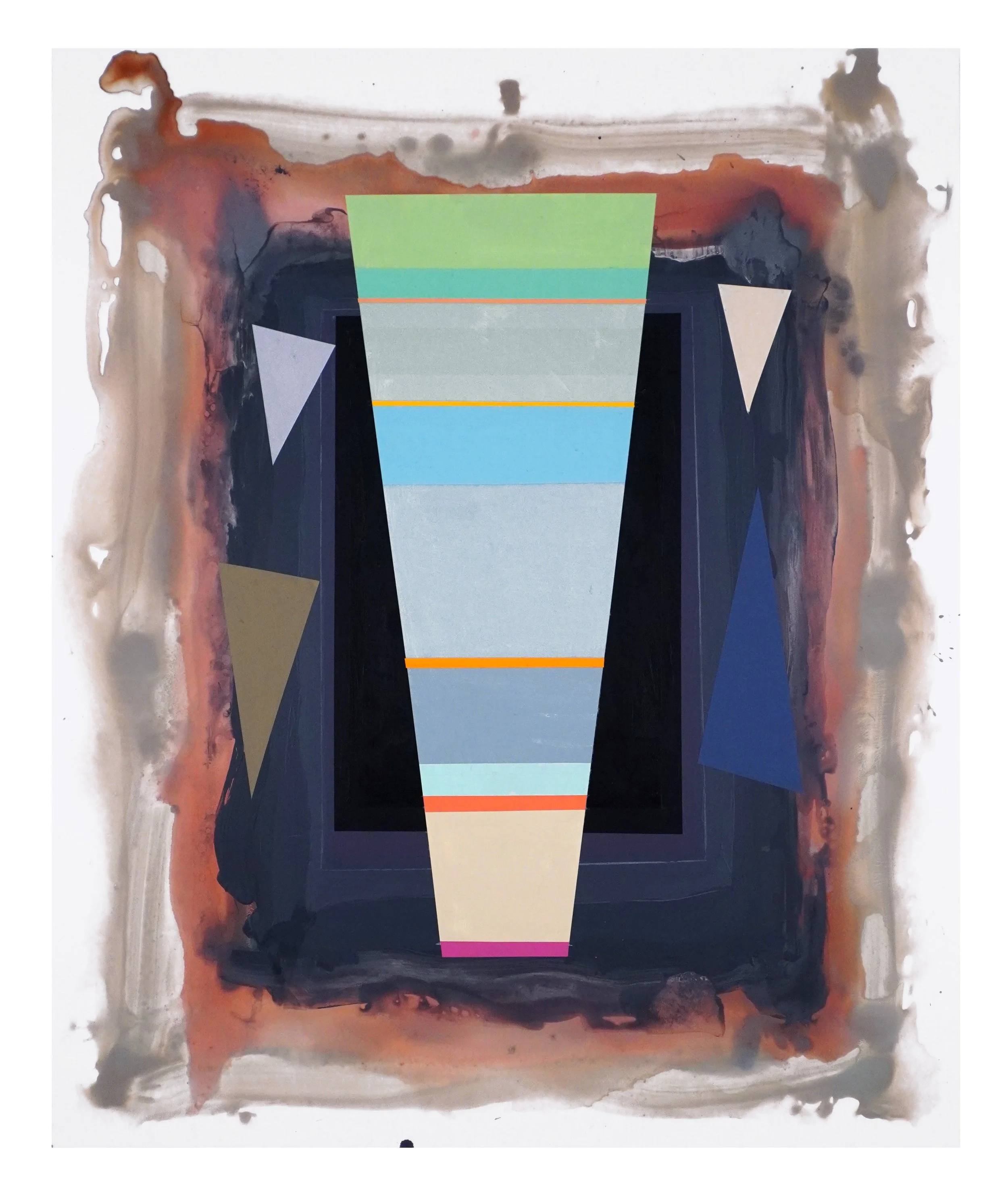


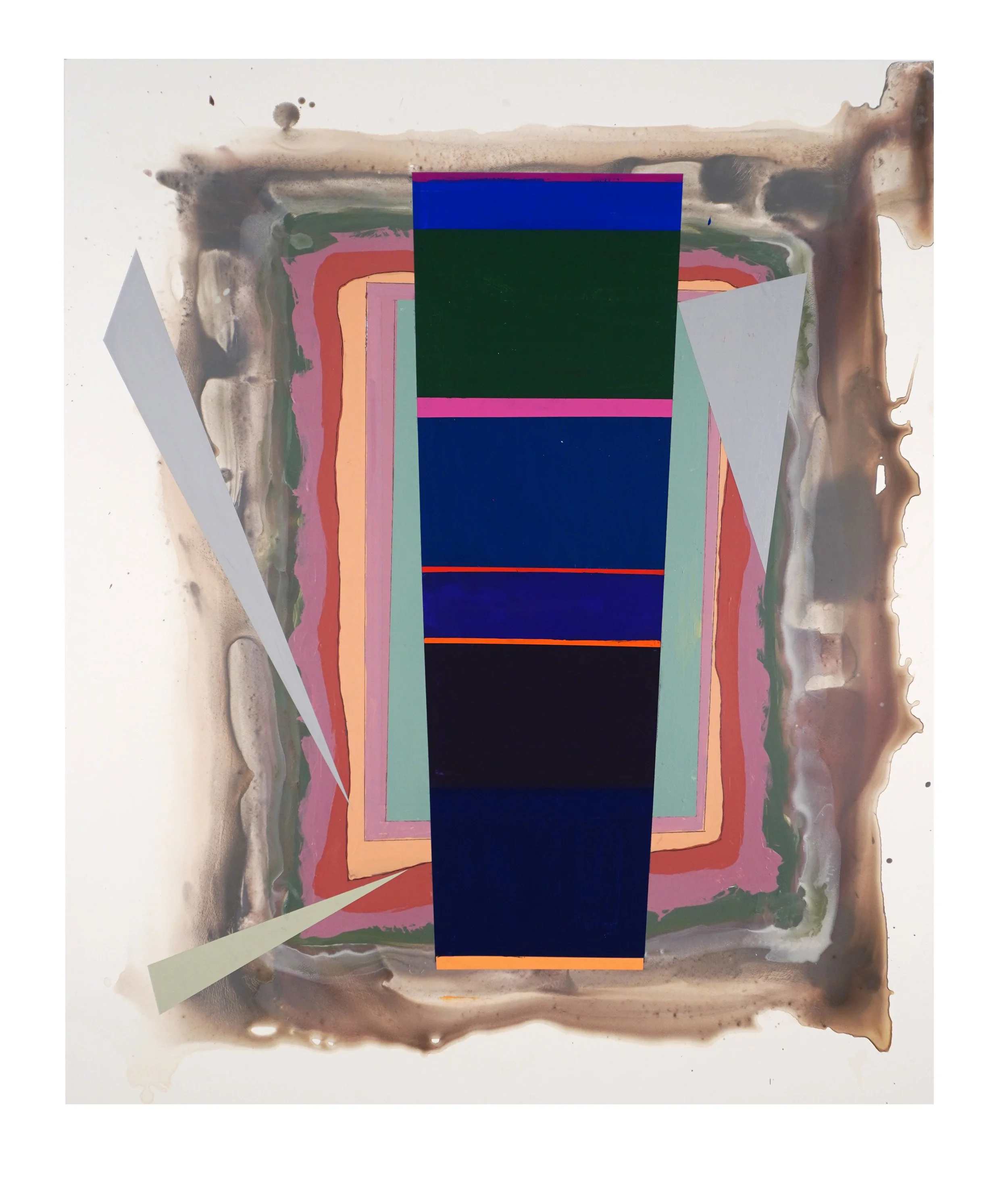


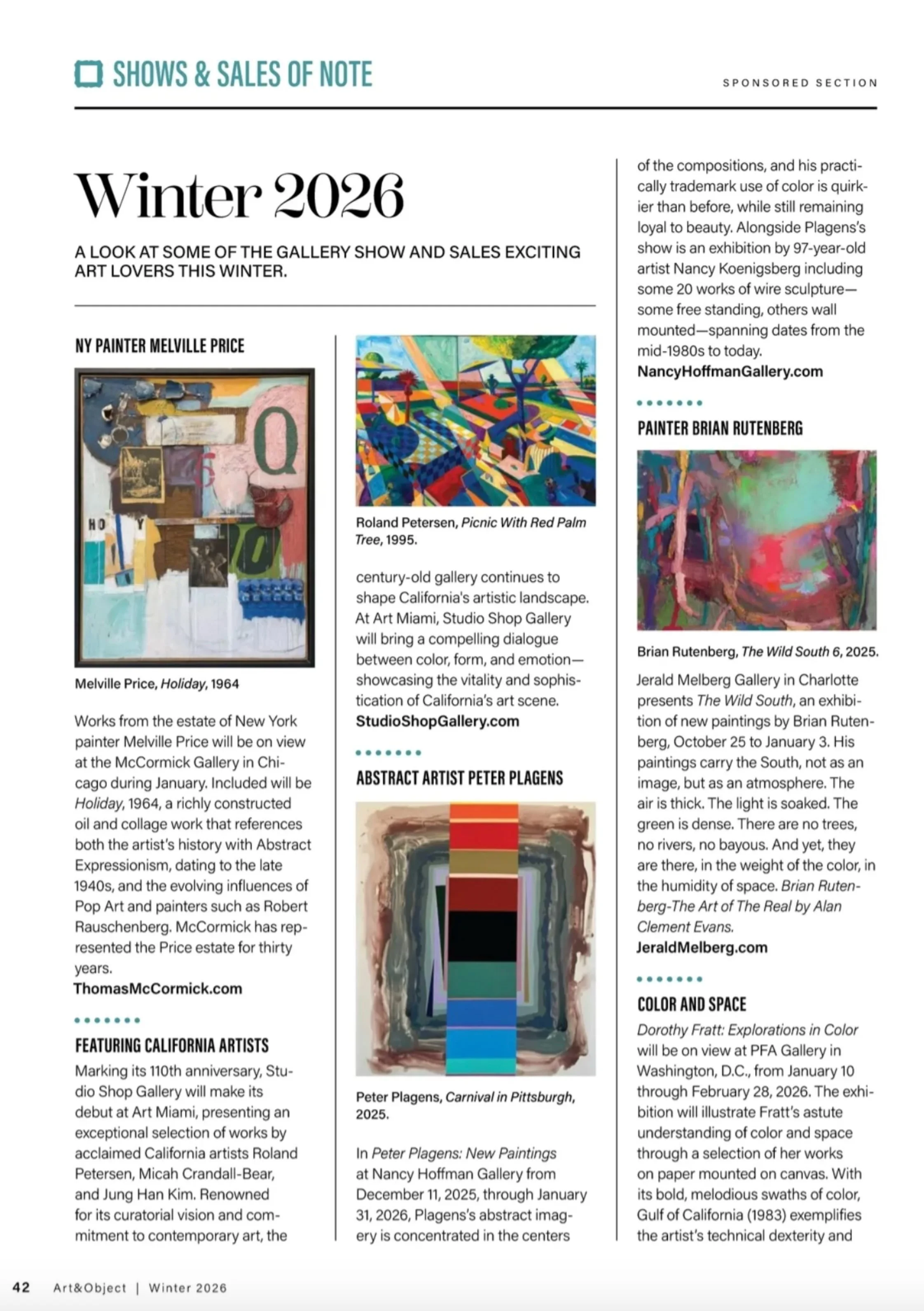
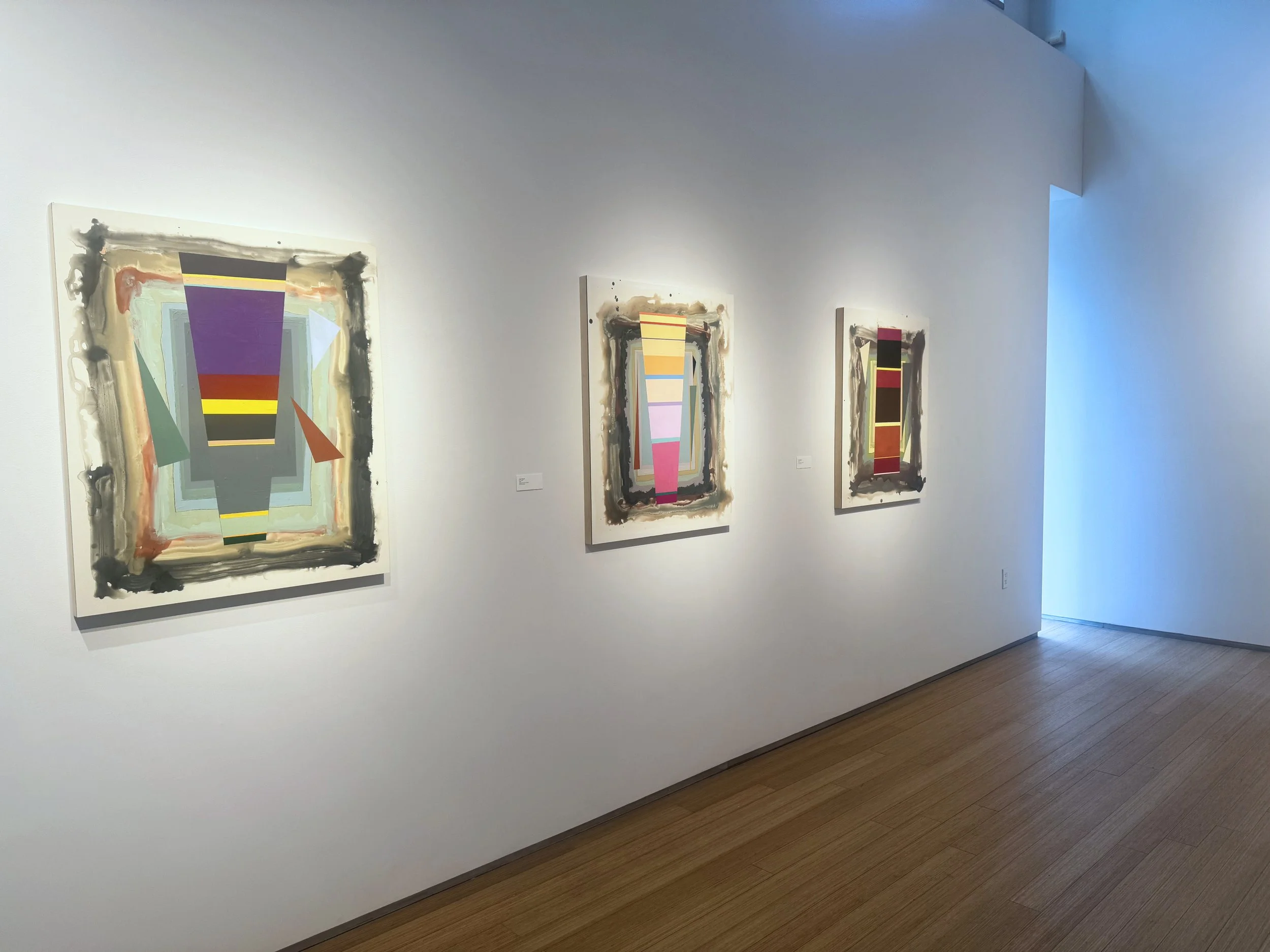
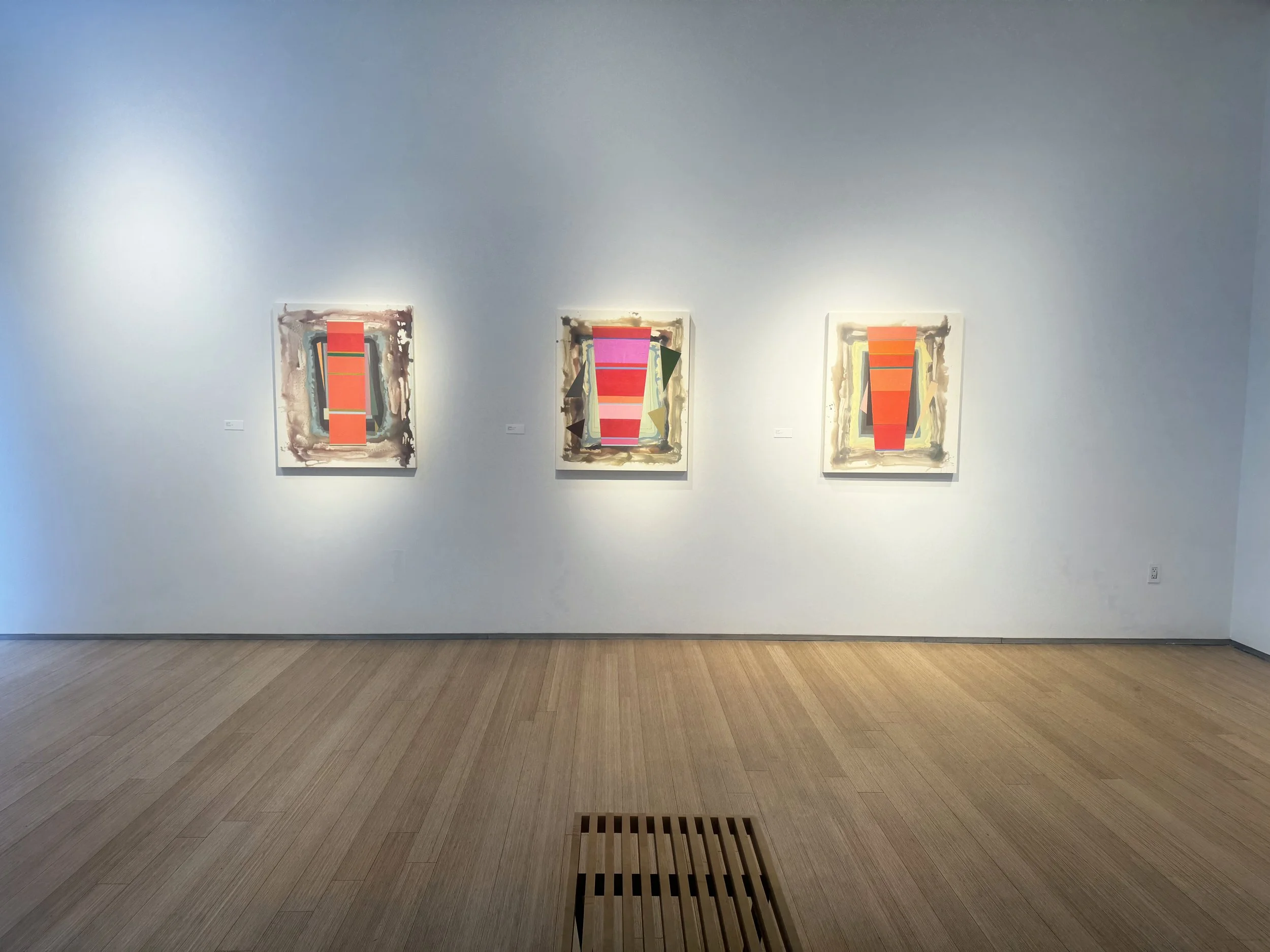
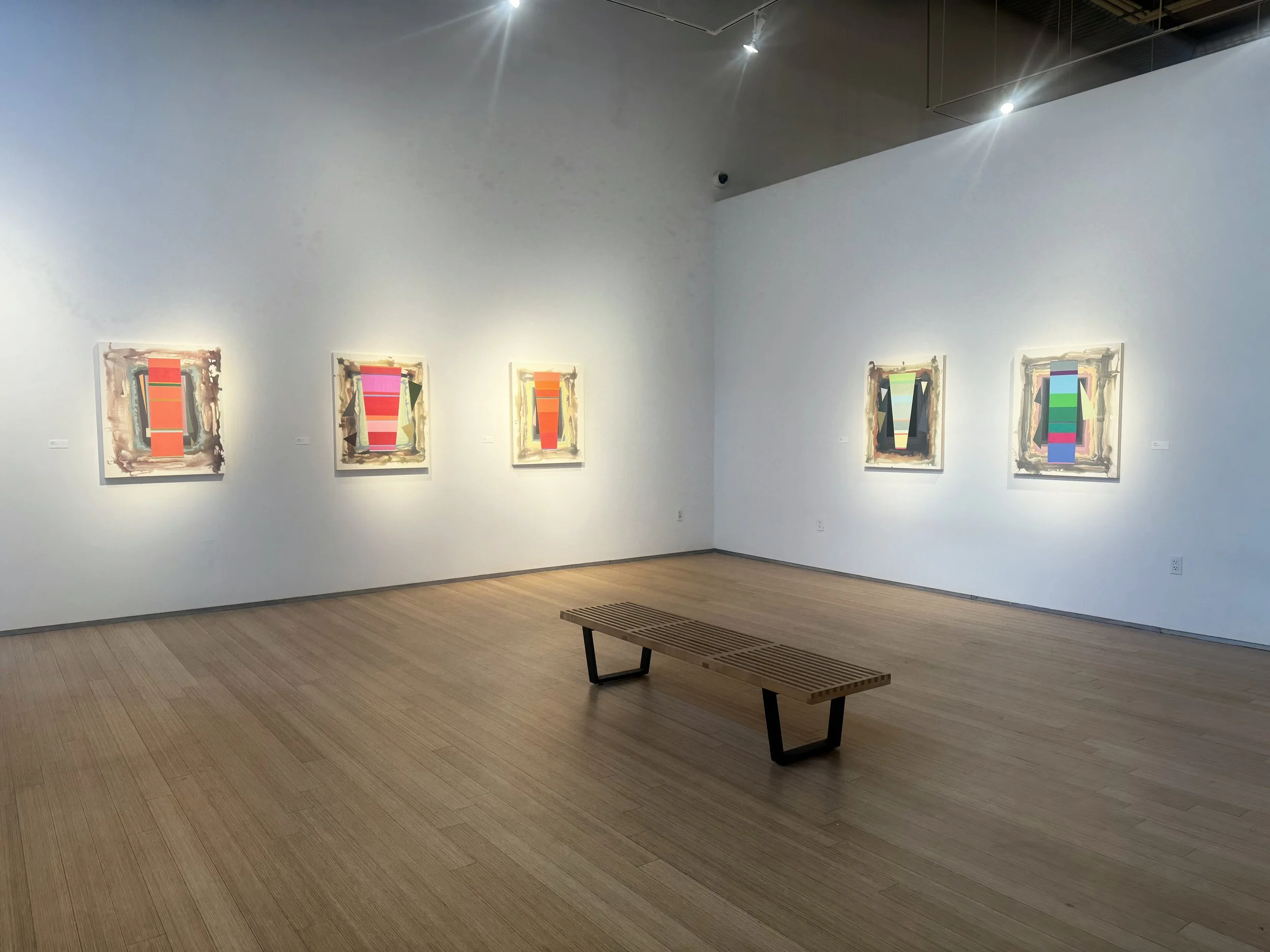
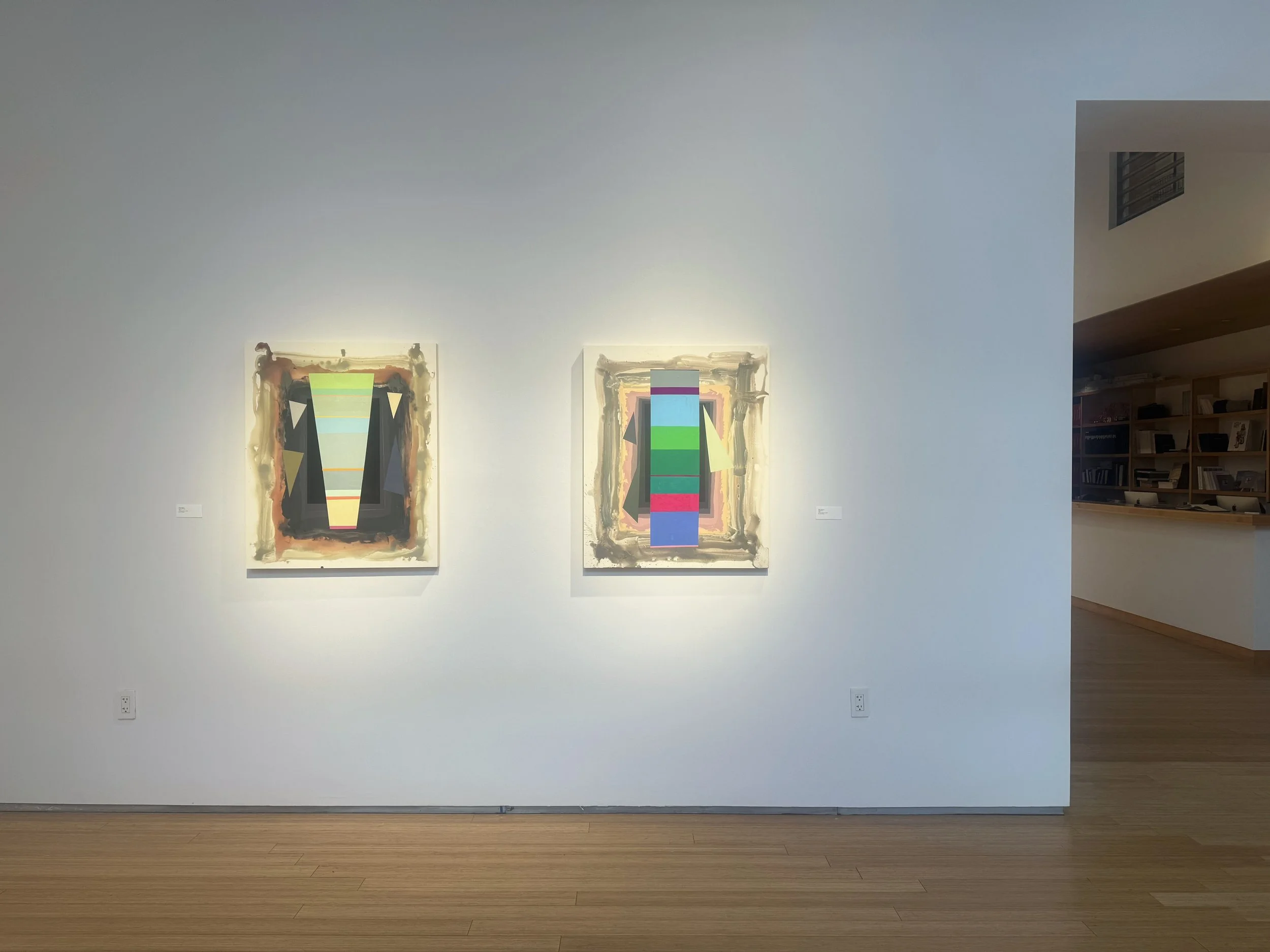
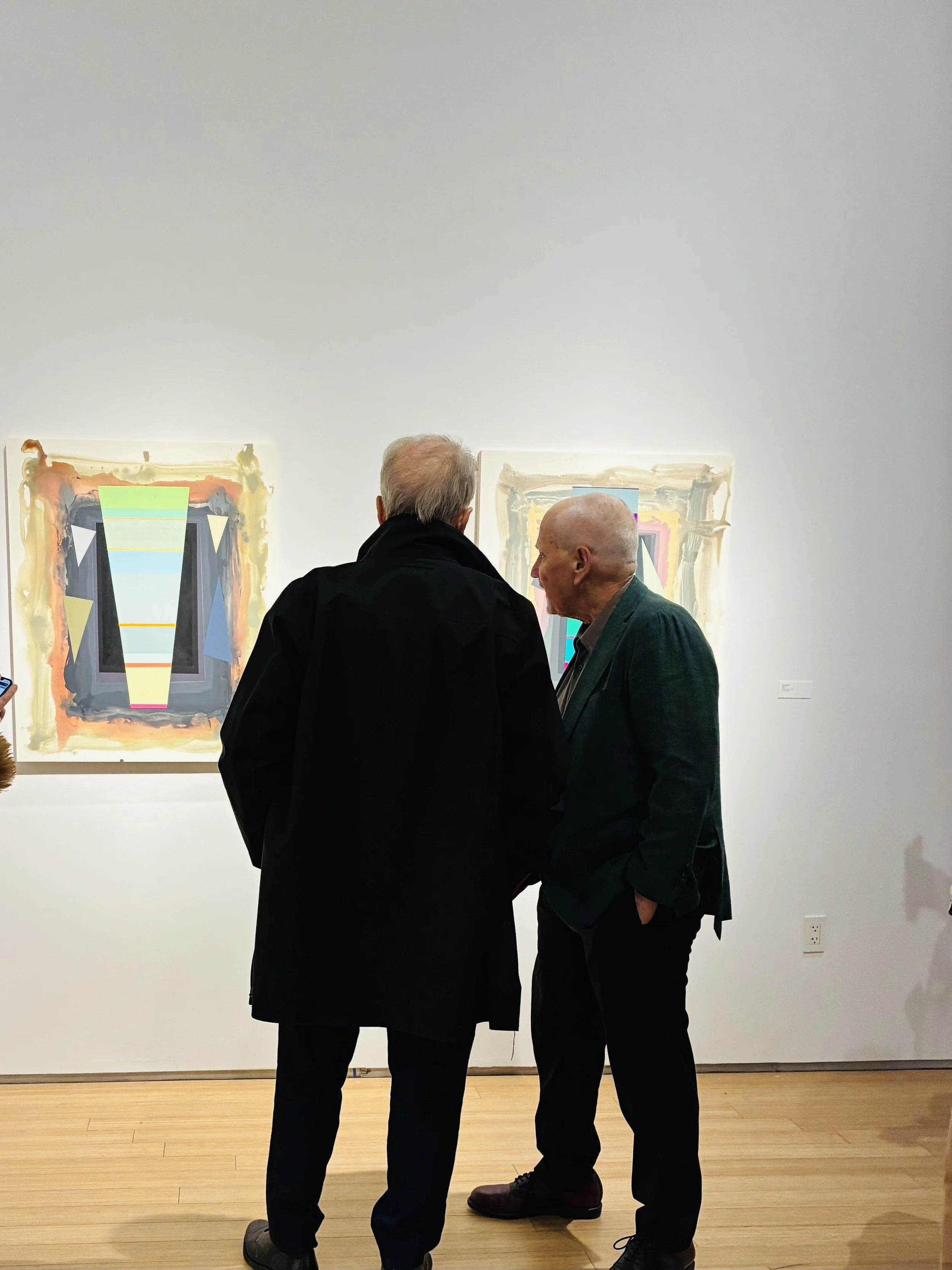
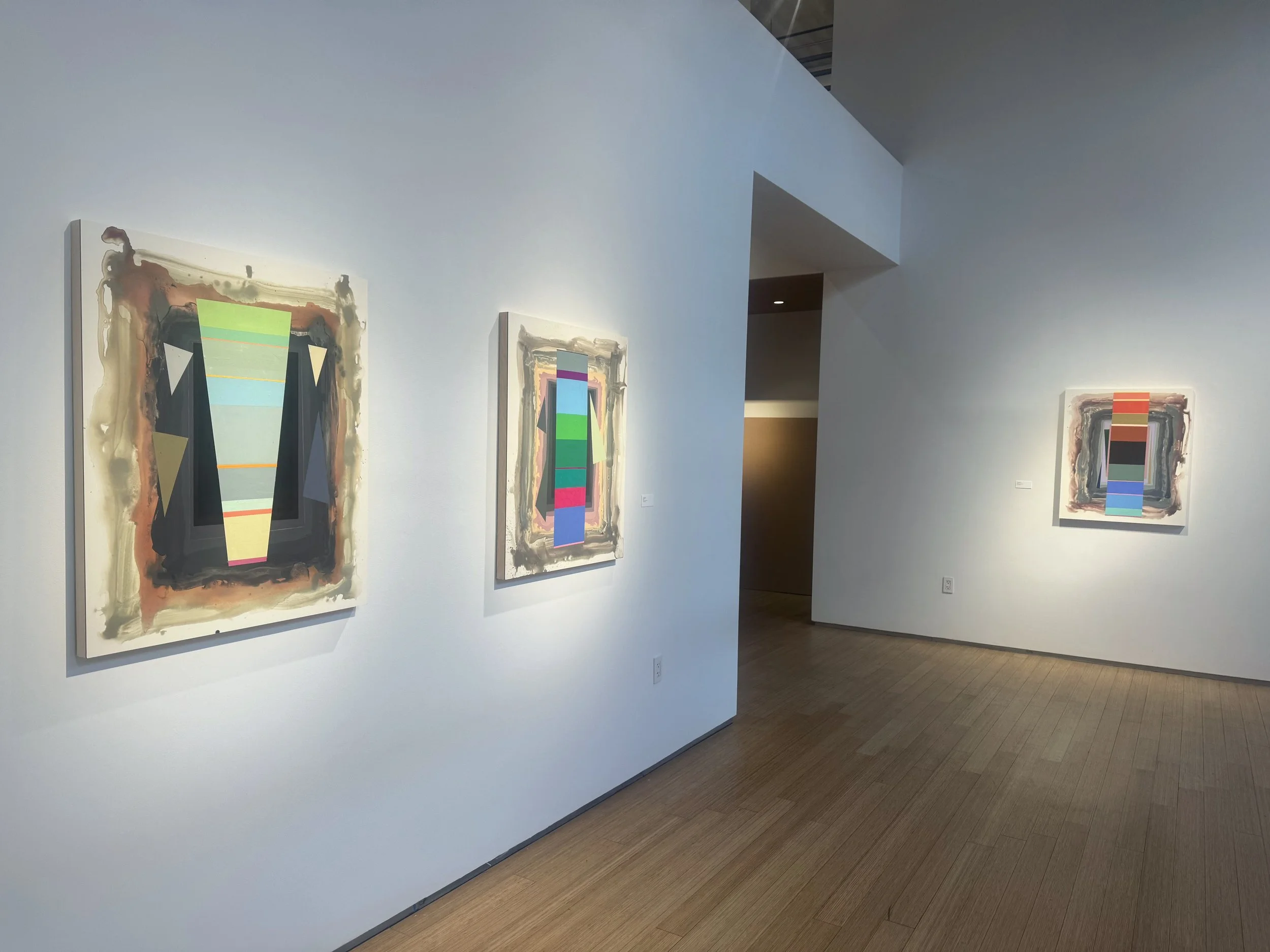
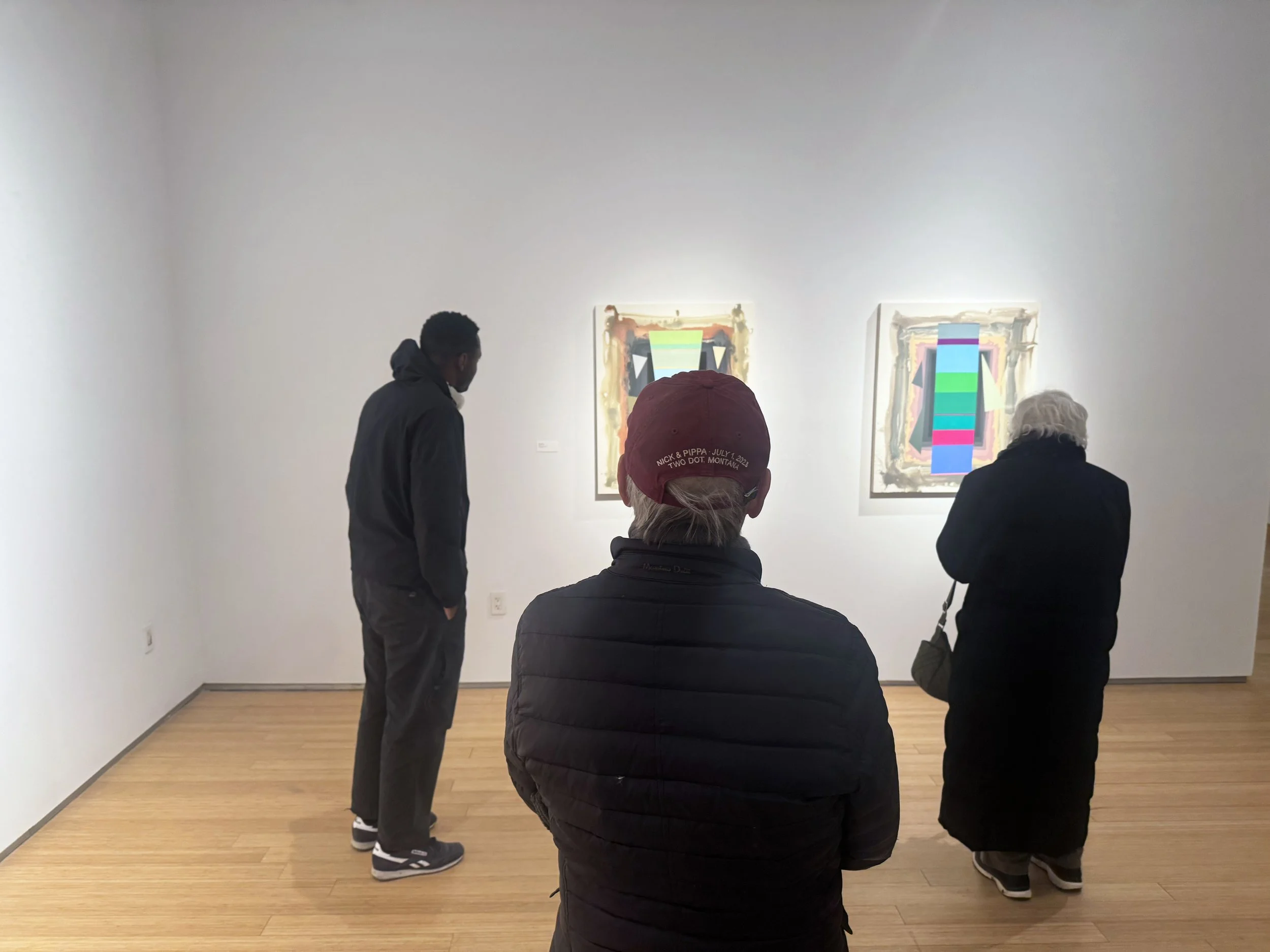
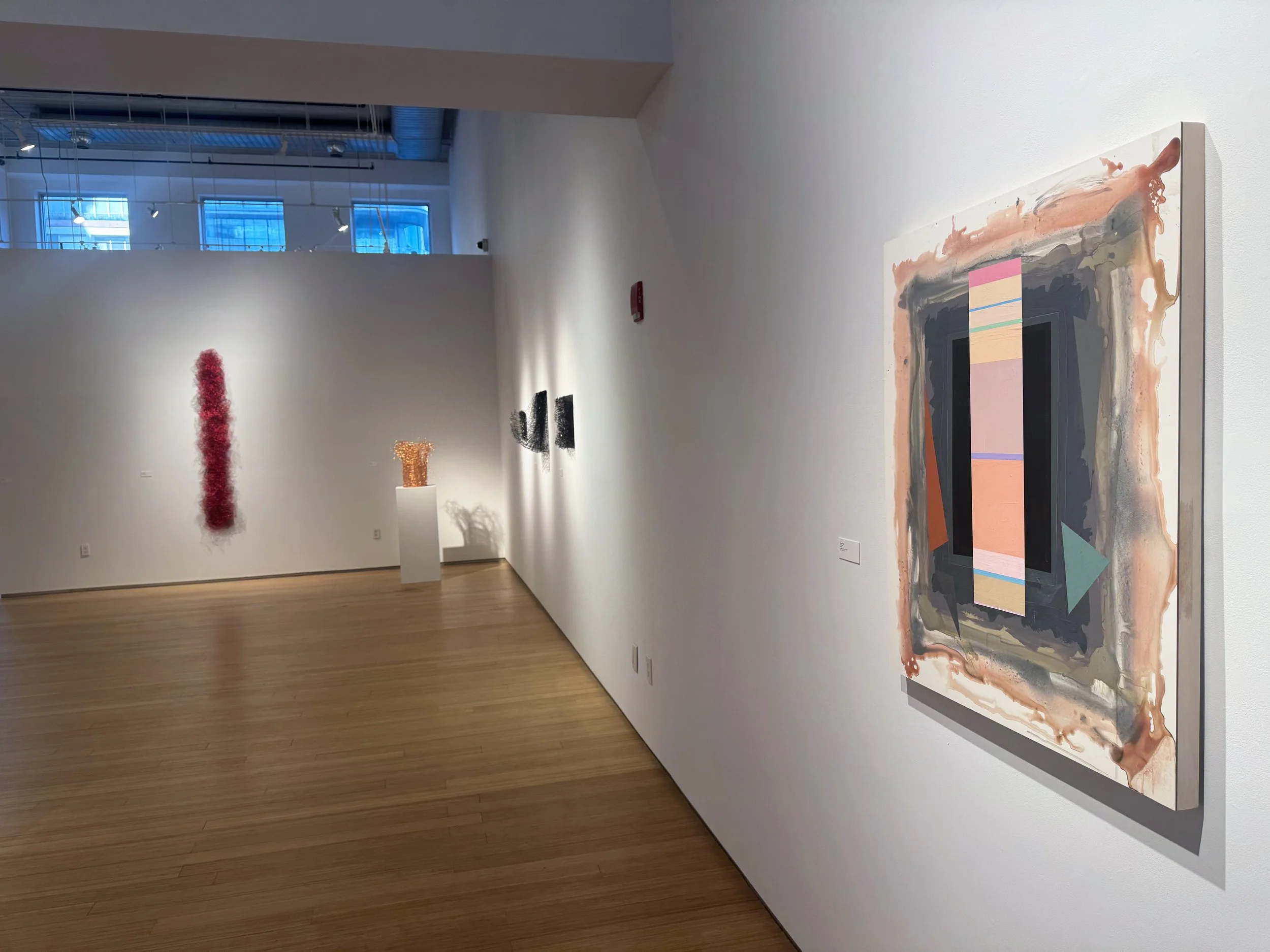
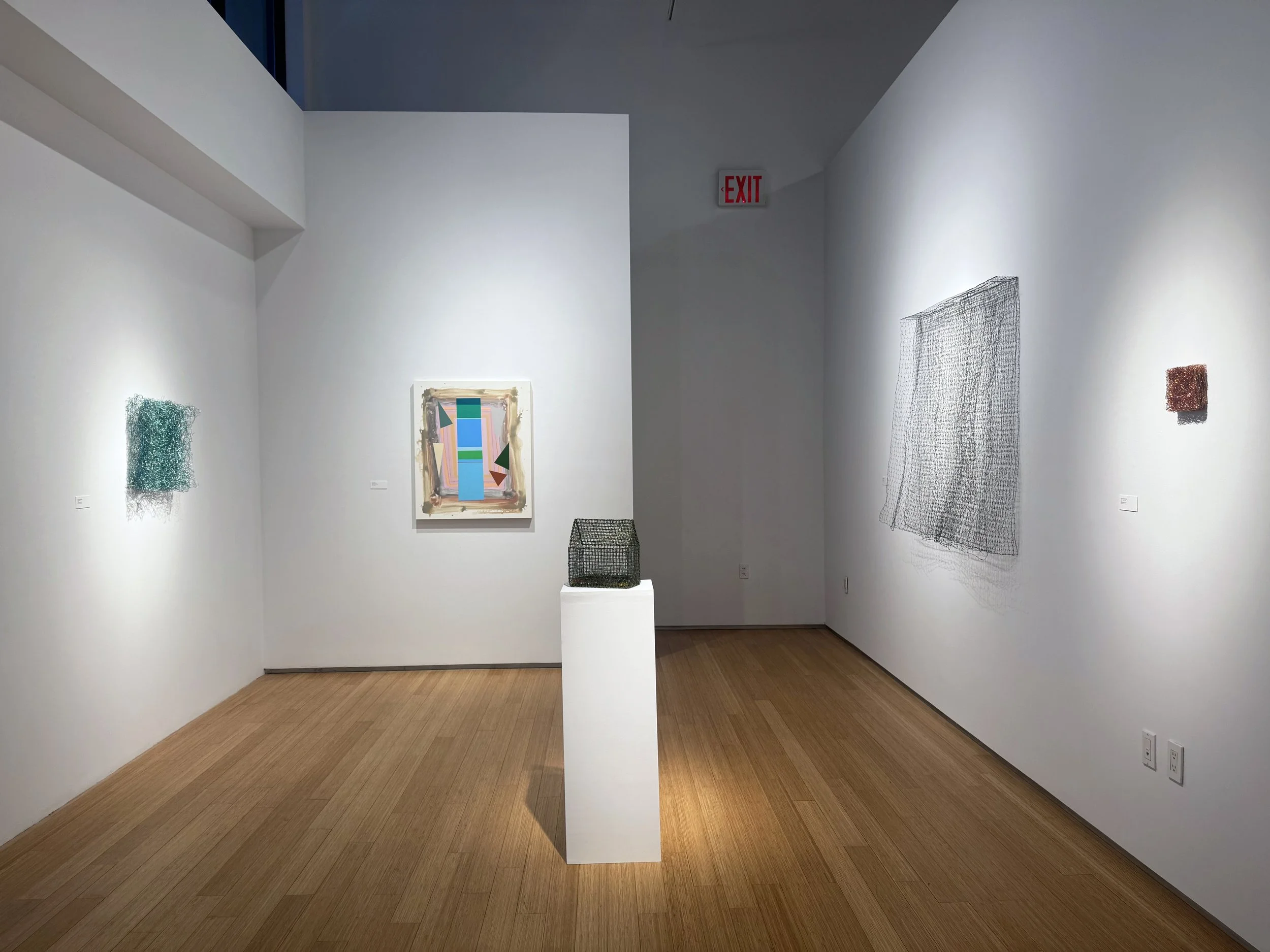
Peter Plagens’s exhibition, comprising his most recent paintings, each measuring 36 x 30 inches, opens at Nancy Hoffman Gallery on December 11, 2025 and continues through January 31, 2026. In these modestly sized works on panel, Plagens’s abstract imagery is concentrated in the centers of the composition, and his practically trademark use of color is quirkier than before, while still remaining loyal to beauty.
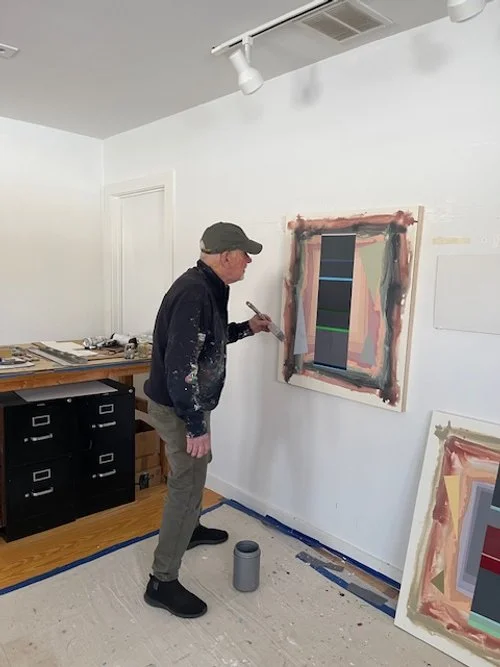
Plagens begins by laying down a background wash that plays with the edges of the panel. Once it is dry, he works inward from the edges by painting succeeding rectangles in opaque layers of muted color. ON top of that background he creates either a truncated triangle or a tall rectangle composed of stacked horizontal shapes made of unexpected and surprising color combinations. Outside the triangle or vertical towers he adds a few floating triangles of more muted color. The result is a series of remarkably potent and unique abstract paintings that merge the soft watercolor-like edges with the rigorous geometric central core.
In contrast to his prior paintings, which were explorations into the range of greys, the new work sings with a celebratory use of color, not shying away from brilliant reds, pastel shades of turquoise and pink or diving into deeper hues of an almost black purple; each work is a symphonic combination of color that in the artist’s hands hum vibrantly.
About this work, the artist says, “In this age where figurative images dominate, I want abstraction to do more than merely repeat what are already established modes. I want it to be a bit bothersome. I try to make my particular brand of abstract painting do that.”
For Plagens, who will celebrate his 85th birthday just after the show closes, these works are a celebration of life well lived.
Q&A with Peter Plagens November 2025
Q: You have been making abstract paintings for five decades, and have been called a “formalist” by prominent art critics who have reviewed your work in major museum shows. How has your work changed over the years?
A: It’s not changed philosophically, but it has changed visually. Those changes haven’t been programmatic (i.e., from a change in philosophy about painting), but seat-of-the-pants in the studio. A series of paintings will look like family, and the next series will look like a different – but related – family, but they all come out of the same outlook about painting.
Q: Are there specific influences you would cite in terms of your painting career? Artists who have influenced your work? Or changes in the contemporary art world that have changed the way you make paintings?
A: For a while, in my 20s and 30s, I was a big Hans Hofmann fan, (I wouldn’t say “follower”), and I was partial to the Abstract Expressionists. Since then, I’ve been attracted to the work of various painters, whose influence has been waxing or waning: deKooning, James Brooks, Lee Krasner, Louise Fishman (a contemporary). I lived in Belgium for about a year to look at the likes of Van Eyck, Van der Weyden, et al., and I suppose there’s something of that still creeping into my work.
Q: You are a renowned art critic, and also an author of several books. Do you see overlaps between your writing work and your painting work – in terms of process or inspiration? If so, can you describe that?
A: Most artists I know have opinions about other artists, and their exhibitions, and they’ll state them in conversation. I just put it in print because a) I like writing, b) I get to see exhibitions in places to where my airfare is paid. It started long ago (1966) in LA, when Artforum had its office there, and it gave me a reason to go to La Cienega Blvd. (“Gallery Row” in those days) with some regularity. What I see is too varied to be much of an inspiration, other than, “These artists kept at it, so I should, too.”
Q: You moved to New York in 1985 after years of living and working in California. Would you say that the move to New York changed the way that you paint? If so, how?
A: Not really. I was always a kind of painterly artist, a bit of a fish-out-of-water in the light-and- space, “fantastic object” art scene in LA. New York was more of a painter’s town. I try not to be a citymonger, but will admit that I got accustomed to New York – we lived in Tribeca for almost 40 years – and find LA logistically difficult when I return to it.
Q: The new body of work which will be on view at Nancy Hoffman Gallery through January 2026 is consistent with prior work in its use of color but is “quirkier than before” – how so?
A: “Quirkier” probably because of that seat-of-the-pants approach. I do get ideas about that central hard-edge element, but always end up not following my own tentative plan. It’s hard to explain other than saying I do what looks good to me.
Q: Anything else you’d like to add?
A: I’ve been lucky. Lower-middle-class kid got a university education, some teaching jobs to see me through, a kind of out-of-the-blue grant to look at Flemish painting, a critic’s job at Newsweek which paid the rent and allowed me to see lots of art (e.g., Vermeer in The Hague) that otherwise wouldn’t have been able to see. Most lucky for me, is being with my spouse, the painter Laurie Fendrich, and getting her informal critiques all along.
About the Artist
Peter Plagens was born in Dayton, Ohio in 1941, and graduated from the University of Southern California in 1962 with a B.F.A. degree in Fine Arts. He received his M.F.A. from Syracuse University in 1964. Plagens has been the recipient of two N.E.A. artist’ fellowships and a Guggenheim fellowship in painting. A retrospective exhibition of his work, held at the Fisher Museum at the University of Southern California, traveled to Columbia College in Chicago and The Butler Institute of American Art in Youngstown, Ohio. During the fall, 2015 semester, he was Distinguished Visiting Artist at the San Francisco Art Institute, and during August 2017, he completed a second residency, sponsored by the Museum of Fine Arts, Houston, at the Dora Maar House (now the Dora Maar Cultural Center) in Ménerbes, France. Plagens has had numerous solo exhibitions in galleries in both the U.S. and abroad.
Plagens works are in the collections of the Hirshhorn Museum, the Museum of Fine Arts, Houston, Chase Manhattan Bank, the Museum of Contemporary Art, San Diego, the Baltimore Museum of Art, the Denver Art Museum, the Power Memorial Gallery, Sydney, Australia, the Prudential Insurance Corporation, Tawaraya, Kyoto, Japan, and other institutions.
He lives in Lakeville, Connecticut with his wife, the painter Laurie Fendrich.