Joseph Raffael
White Ground Paintings
May 14 - June 27, 2026
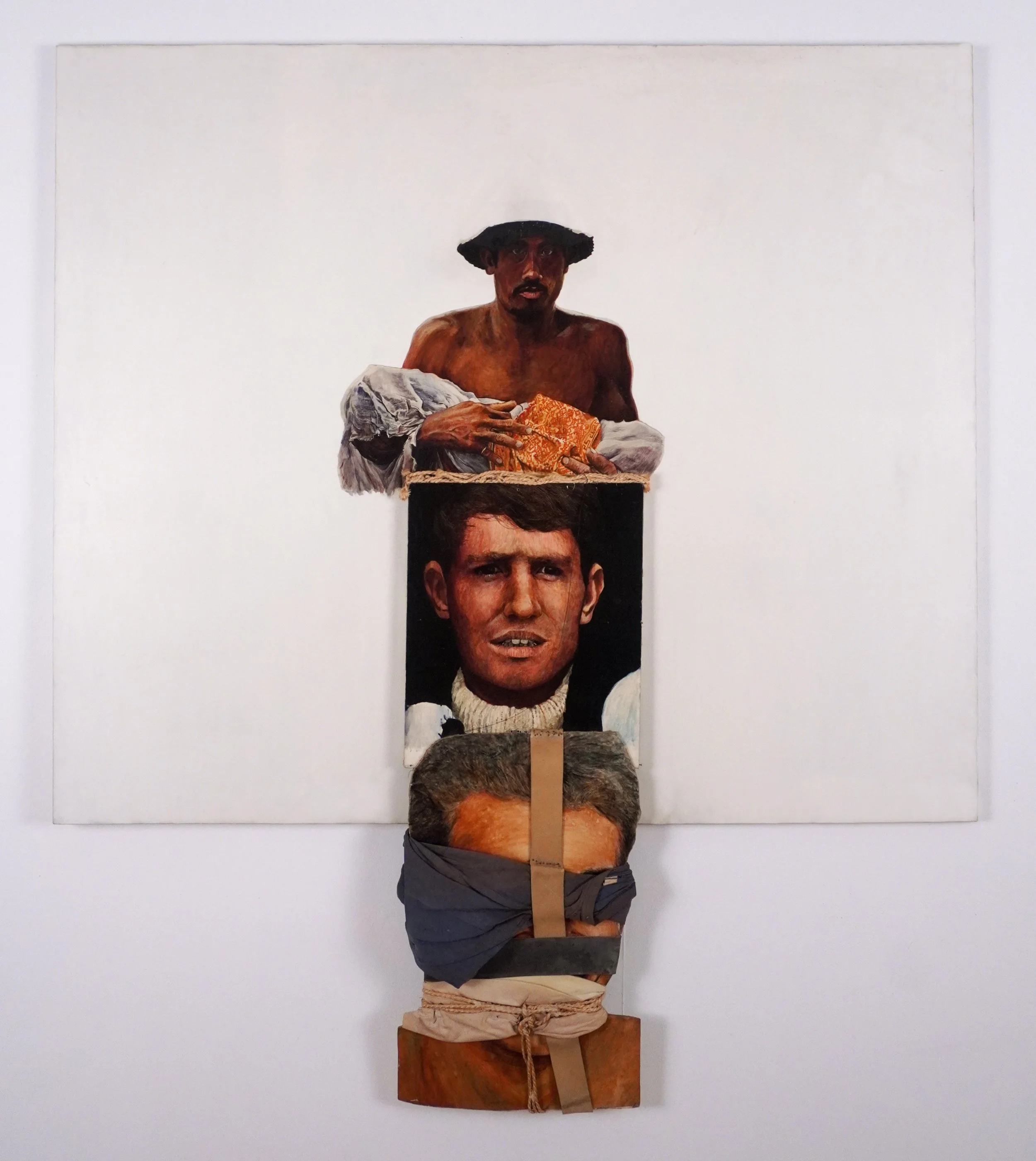
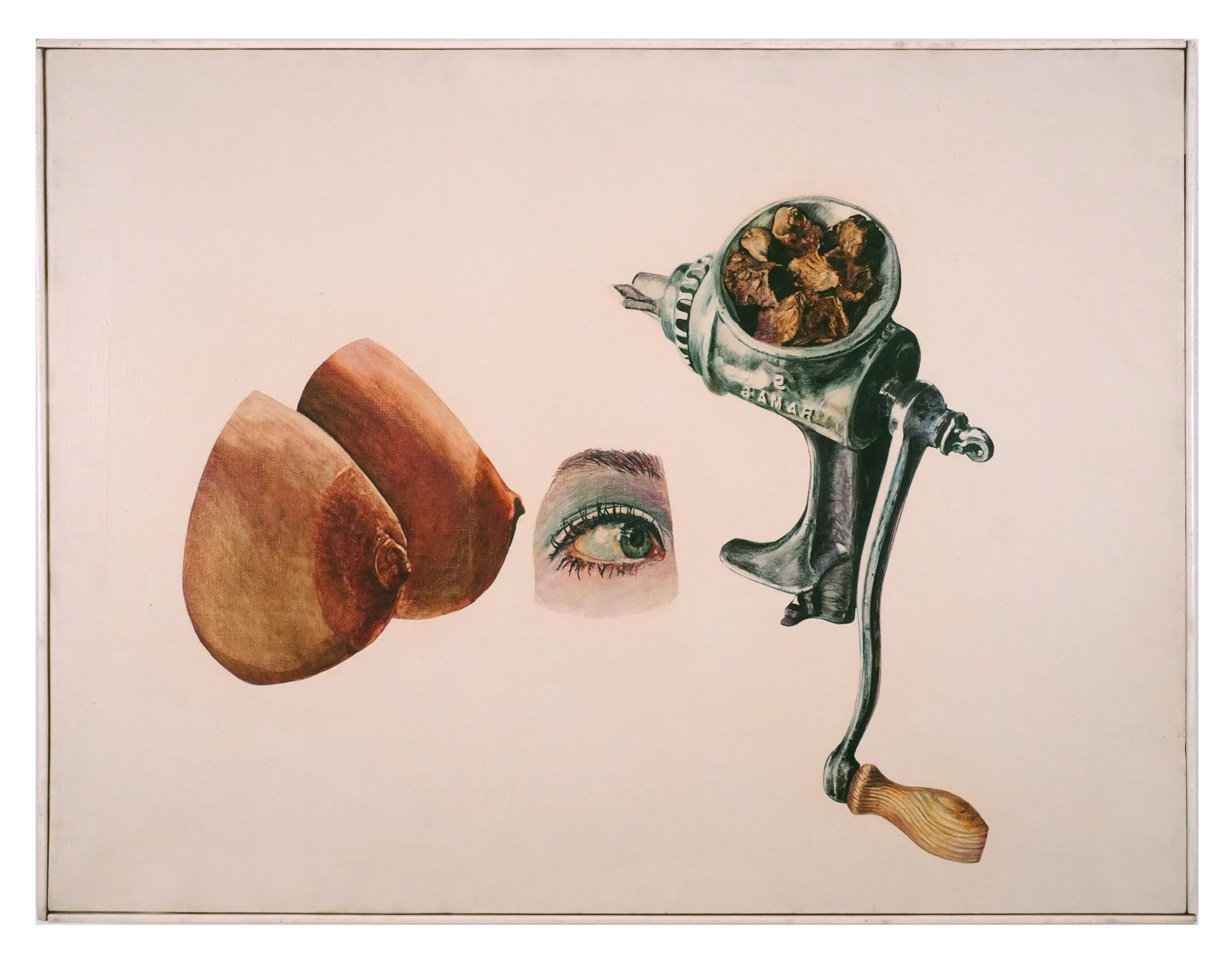
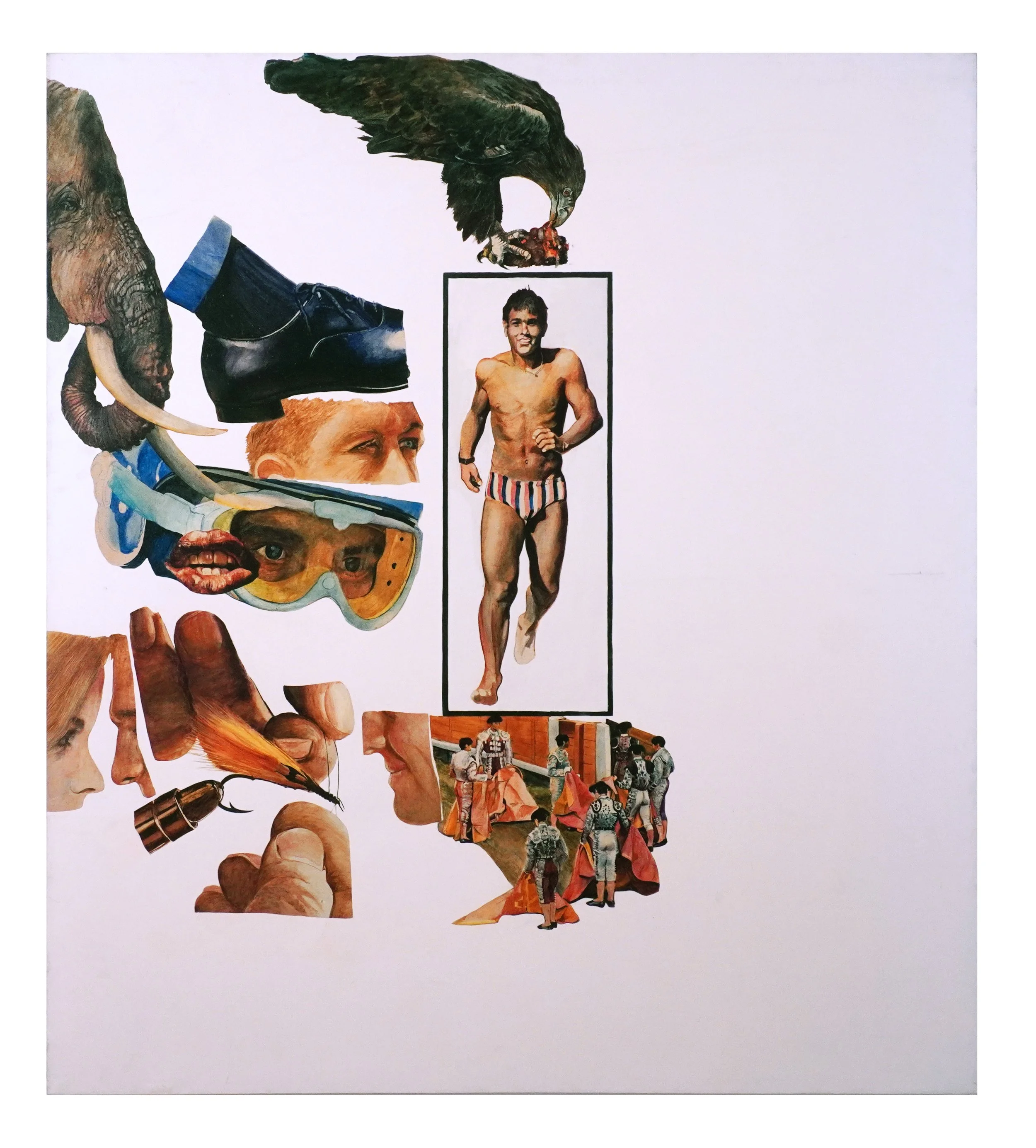
Nancy Hoffman Gallery is pleased to announce Joseph Raffael: White Ground Paintings, on view May 14 through June 27, 2026. During the 1960s, ideas on art and painting were being reinvented. In the 1950s, abstract expressionism reigned. In the early ‘60s, figuration blossomed. Andy Warhol, Roy Lichtenstein, and James Rosenquist began to appropriate imagery from popular culture – billboards, comic strips, newspaper, photographs, movie stills – to produce canvases with an industrial edge. This was the world that Joseph Raffael, then known as Joe Rafaele, confronted when he began to exhibit his work.
After a bout of hepatitis and the death of his father, Raffael rethought his approach to painting leaving behind his earlier abstract work. He had a renewed zest for life, which resulted in a series of White Ground Paintings, exhibited in 1965, at the Stable Gallery where Warhol had had his first New York pop art show a couple of years earlier. The paintings resembled painted collages: with carefully painted fragments organized on rectangles of primed canvas with white space surrounding them. The paintings were not narrative or concerned with connection of imagery, they represented the artist’s state of mind, interested in all aspects of humanity, fueled by his commitment to psychoanalysis.
“Fragments juxtapose photorealistic images of body parts, machinery, and consumer products on a white ground, with an emphasis on male beauty and machismo, with many images coming from magazine photographs,” said Raffael, in conversation with Christopher Finch, who wrote a book on Raffael. The artist explained that the White Ground Paintings reflected his fragmented state of mind at
the time, following his illness, his father’s death, his absorption in analysis, as well as meditation.
Joseph Raffael was a painter of his generation. He turned his back on the New York art world early in his career, and was able to pursue his own vision without worrying about critics, curators, and academics.
The White Ground paintings attracted considerable attention when they were first shown. They were a potent influence on all representational work that followed them. Soon Raffael abandoned the White Ground works in favor of single image, figurative paintings, coinciding with a transformation in his life, and a move to Northern California, not before he had become part of a circle of compatriot artists: Paul Thek, Peter Hujar, Ann Wilson, among others.
In Monkey, Brassiere and Figure (1964), the artist juxtaposes three disparate images: the monkey perfectly painted, coiffed, looking out at the viewer, a regal presence from the animal kingdom; an old-fashioned brassiere as if filled with a woman’s breasts; and tenderly rendered fragments of a male figure, a tanned leg, a toned and tan male torso. As manifestation of the artist’s fragmented mind, the painting suggests many interpretations: love of woman, love of man, respect for the animal kingdom, and more.
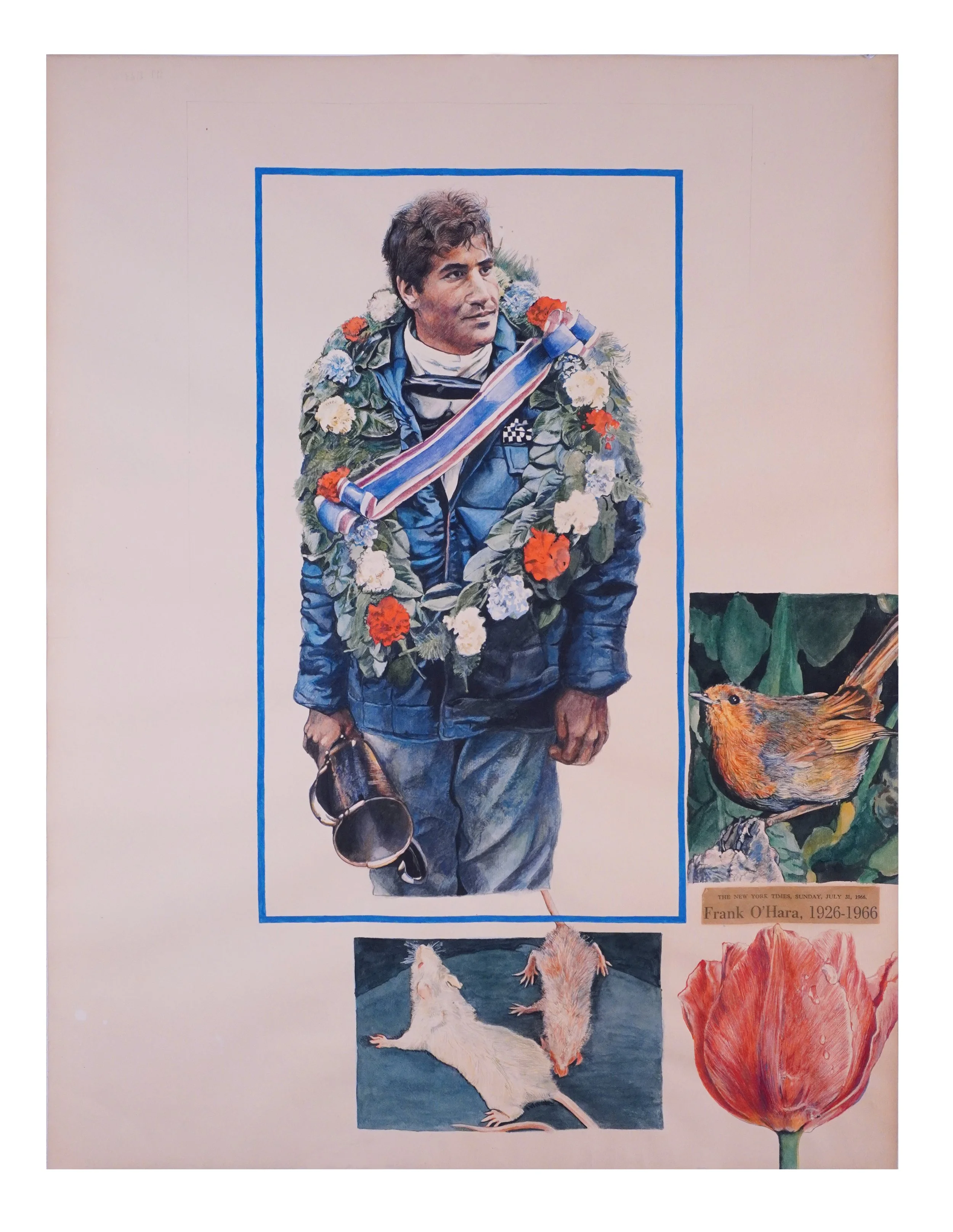
In his watercolor, Homage to Frank O’Hara (1967), the poet wears a crowning wreath and holds a trophy in one of his hands. O’Hara died at the age of 40 after a tragic jeep accident. He had already published a book that won the National Book Award. He was a known and admired poet, a curator at the Museum of Modern Art, and an art critic who loved the arts and music. It is not difficult to imagine Raffael and O’Hara traveling in the same circles. In the watercolor we see two crawling mice, a red tulip, and a robin red breast. O’Hara’s life ended when he was in the bloom of adulthood, but way too early. We can surmise what the fragments and imagery may have meant to the artist. One thing that seems clear is Raffael’s admiration of and appreciation for O’Hara’s work.
About the Artist
Joseph Raffael was born in Brooklyn, New York in 1933. He attended Cooper Union from 1953-54, and received his B.F.A. from Yale School of Fine Arts in 1956 after studying with Josef Albers on a summer fellowship at Yale in 1954. From 1958-59 he had a Fulbright Fellowship to Florence and Rome. In 1966 he taught at the University of California, Davis, from 1967-69 at the School of Visual Arts in New York, from 1969-74 at California State University at Sacramento. In 1986, he moved to the South of France, where he died in 2021.
His work is included in the collections of a large number of museums, including the Oakland Museum of California, the Art Institute of Chicago, and the Whitney Museum of Art, among others. A painting by Raffael was recently featured in the Whitney’s Sixties Surreal exhibition (September 2025 – January 2026).